


When the regulation makes you answerable for exploitable vulnerabilities, eliminating an entire class of them is nice business. These vulnerabilities exist largely because widespread software programming languages, corresponding to C or C++, are inherently memory insecure. A simple error by a software program engineer, perhaps one line in a system’s multimillion traces of code, might be sufficient for an attacker to exploit. In recent years, new memory-safe languages, such as Rust, have been developed. But rewriting legacy methods in new, memory-safe languages may be costly and complicated.

Reminiscence Secure By Default Language Automated Tooling To Supply Additional Checks To Your Code
C will forged this unfavorable value to an unsigned int and it will turn into a very giant constructive integer. Thus memcpy() will copy a huge amount of reminiscence into buf, overflowing the buffer. Imagine that elsewhere in the code, there’s a login routine that units the authenticated flag provided that the user proves information of the password. Unfortunately, the authenticated flag is saved in memory right after buf. Progress continues in consequence, and we’re hearing growing calls from governments, academia, and even inside our ranks to embrace memory-safety applied sciences as a half of a broader “Secure by Design” approach.
Why The Embedded World Has The Hardest Downside
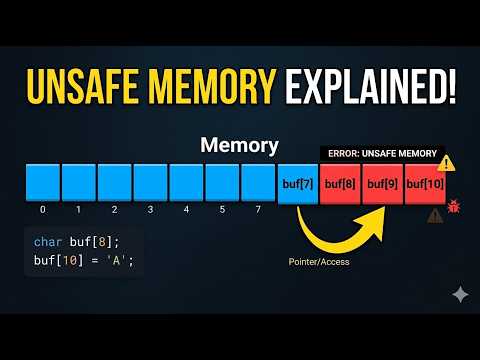
For instance, the TRACTOR program on the Defense Superior Analysis Projects Company is creating synthetic intelligence instruments to routinely translate legacy C code to Rust. Lincoln Laboratory researchers will test and consider the translator for use in DoD systems. Notice that the C compiler won’t warn about the kind mismatch between signed int and unsigned int; it silently inserts an implicit solid. The above instance is particularly nasty, as a end result of https://darkcyan-chimpanzee-281042.hostingersite.com/about-us/ on the floor it seems that the programmer has utilized the proper bounds checks, however they’re flawed. We expect additional developments on this space and will replace this continuum as they emerge.
- Right Here we’ve compiled an inventory of previous exam questions that cowl reminiscence safety vulnerabilities.
- “Use after free” bugs, where an object or structure in reminiscence is deallocated (freed) however nonetheless used, are particularly attractive targets for exploitation.
- In this buffer, the attacker can write the tackle of some malicious code.
- It is theoretically possible to write down C++ code in a method that’s free from memory safety bugs.
Sig Maintainers

While we do advocate for writing new code in reminiscence secure by default languages, we recognize this is not always possible or practical. Existing software have to be maintained and sometimes expanded, regardless of what language it’s written in. A Rust consultant helps you skip the costly trial-and-error part of adoption.
The DSbD programme has pushed the development of the CHERI (Capability Enhanced RISC Instructions) know-how, which provides reminiscence safety and compartmentalisation native to the hardware. With the current funding concluding, DSbD has made a major contribution by main consciousness to socialize the problem and eulogising the options area at a world stage. I’ve uttered these words more and more in recent years, often throughout my opening remarks on the IoTSF Annual Conference and I’ll keep saying them till reminiscence safety just isn’t such a big deal to be involved about. In other words, we create CVEs when it’s attainable to use a safe library API in a method that might cause a reminiscence bug, even when we haven’t (yet) discovered any program within the wild that might actually accomplish that. This signifies that a few of the CVEs reported in Rust are rather more “strict” than those in C or C++, which some individuals don’t find “fair”.